
Blog
European Car Oil Changes: Why the Specification Matters
Stuttgart Motors Eastland
You are booking an oil change for your European car. One shop asks which engine you have. Another quote simply says “full synthetic.” The bottle you keep in the garage says 5W-30, so that sounds like enough information.
It is a start. The correct oil must match the viscosity grade and the manufacturer requirements for your particular engine. Two oils can carry the same viscosity number without having the same approvals or intended applications.
For a BMW, Mercedes-Benz, Audi, Porsche, or Volkswagen owner, the useful question is: “Does this oil meet the specification my engine requires?” That is also the approach to maintenance at Stuttgart Motors Eastland in Lexington: identify the vehicle, check its requirements, and explain the service before you approve it.
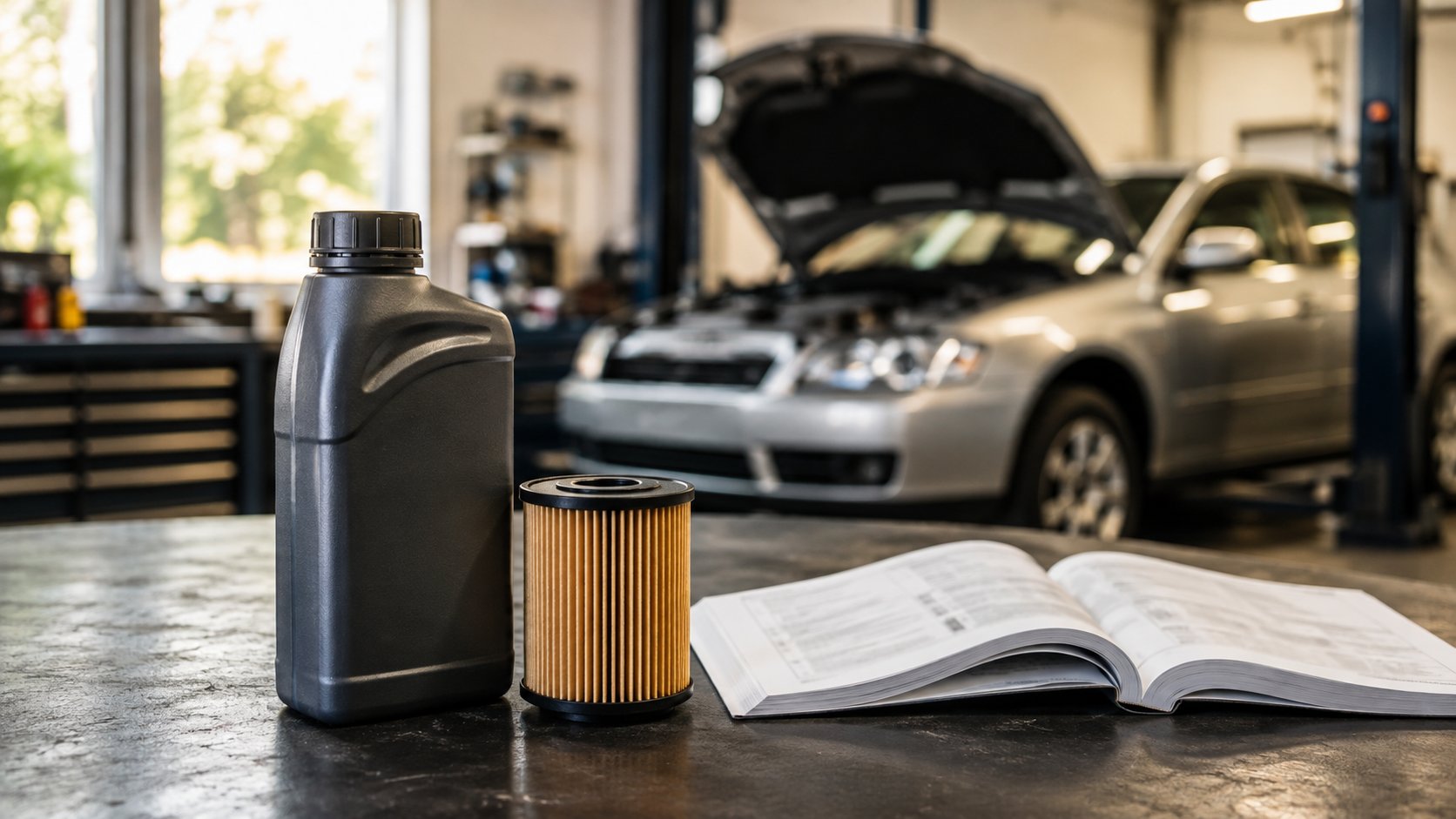
Cover image: AI-generated editorial illustration, not a photograph of Stuttgart Motors or a customer vehicle.
What the Numbers on an Oil Bottle Tell You
Viscosity is one part of the specification
A designation such as 5W-30 describes an oil’s viscosity characteristics. The part containing W relates to low-temperature performance; the other number identifies a high-temperature viscosity grade. It is not a complete description of the oil’s performance or a universal recommendation for European engines. The American Petroleum Institute’s motor oil guide explains oil labeling and directs drivers to their vehicle manufacturer’s recommendations.
Think of the viscosity grade as one item on a requirements list. Finding a bottle with the right number does not mean every other requirement has been met. A different grade should not be chosen just because someone says thicker oil is better for an older engine or thinner oil is better in winter. Start with the guidance for the exact vehicle.
Manufacturer approvals answer a different question
Automakers can specify additional oil performance requirements for particular engines. Those requirements may be identified by an approval or standard printed on the product label and listed in the manufacturer’s service information.
For a Volkswagen, compare the VW standard in your own owner’s manual with the oil bottle’s labeling. U.S. owners can find their vehicle’s manual through Volkswagen’s U.S. owner resources. Mercedes-Benz likewise instructs owners to use oil approved for their vehicle on page 346 of its 2024 CLA owner’s manual. That manual is one model-specific example, not a specification to apply to every Mercedes.
When your vehicle requires a manufacturer approval, confirm that the exact product carries it. An oil supplier’s “recommended for” or “meets requirements” claim does not, by itself, establish formal automaker approval. For example, Mobil’s product information lists approvals separately from recommendations and requirements met.
You do not need to memorize approval codes. You need a service provider who can identify which one applies and confirm that the oil being installed matches it.
”Full synthetic” does not identify every suitable engine
The words “full synthetic” do not tell you the full application list. Neither does a familiar brand name.
For example, Mobil’s European-vehicle range includes different product families for different applications, including engines with particulate filters. Both its FS and ESP families include a 5W-30 option. The shared viscosity grade does not make the products interchangeable for every engine.
This is an example of why the details matter, not a recommendation to buy either product for your car. Match the actual product and its stated approvals to the vehicle’s requirements.
What to Ask When You Schedule an Oil Change
An oil change should be easy to arrange. A few specific questions make the quote easier to understand without turning the appointment into a technical exam.
Start with the vehicle, not a generic package
Give the shop the year, make, model, engine if known, and current mileage. Have the VIN available if requested. Two cars with the same model badge can have different engines, and a previous owner’s notes may not tell the whole story.
Then ask:
- Which oil viscosity and manufacturer specification does this engine require?
- What exact oil and filter are included in the quote?
- What service interval applies to this vehicle?
- Can the oil product and service details be recorded on the invoice?
Keep that invoice with the maintenance history. A record that identifies the product used is more useful at the next appointment than a receipt that says only “oil change.”
Keep the filter and interval in the conversation
The oil is only part of the service. The correct filter and the prescribed replacement interval also matter. Mercedes-Benz’s manual cautions against using an incorrect oil or filter and against extending the prescribed interval by changing either one.
There is no single mileage interval we can responsibly apply to every European car. Use the maintenance information for your model, along with any applicable time limit and service reminder. Tell the shop how you use the vehicle and whether you have the earlier service records.
A daily commute along Richmond Road and occasional weekend use are different ownership patterns worth mentioning. Neither description, by itself, establishes a new oil-change interval. It gives the technician context to review against the manufacturer’s schedule.
Ask before choosing a top-up oil
If you want to keep a spare bottle in the trunk, ask for the exact product or specification appropriate for your engine. Take a photo of the label for your records so you can identify it later.
For checking the level or adding oil, follow your vehicle’s own procedure. Avoid guessing the amount from a dashboard message or copying instructions for another model. If the message concerns oil pressure rather than a routine service reminder, stop somewhere safe, switch off the engine, and seek assistance. Follow the owner’s manual instead of treating a pressure warning as an ordinary top-up request.
Questions European Car Owners Ask
Does every BMW or Mercedes use the same oil?
No. Do not select oil from the badge alone. Model year, engine, and manufacturer service information determine the requirements. The oil used in a friend’s car may not be suitable for yours, even when the cars look similar.
Is the most expensive oil automatically the best choice?
Price does not establish suitability. The useful comparison is whether the product meets the requirements for your engine. Ask what is included in the service and why that oil and filter were selected, rather than choosing from the words “premium” or “synthetic” alone.
My last invoice only says 5W-30. Does that prove the wrong oil was used?
No. It means the invoice does not give you enough detail to confirm the complete specification. Ask the previous service provider which product was installed and for its product information. Avoid assuming there is a problem before you have that information.
Can Stuttgart Motors Eastland handle scheduled oil service?
Yes. Our European and import maintenance services include oil changes with manufacturer-specification fluids and scheduled maintenance for the vehicle. We explain the recommended work and provide an estimate for approval before beginning.
When your next service is due, call (859) 554-2550 or see how to request an appointment. Stuttgart Motors Eastland is at 1048 Eastland Dr, Lexington, KY 40505. Tell us what you drive and bring the service records you have. We will help you make the next oil change a documented part of the car’s maintenance history.